
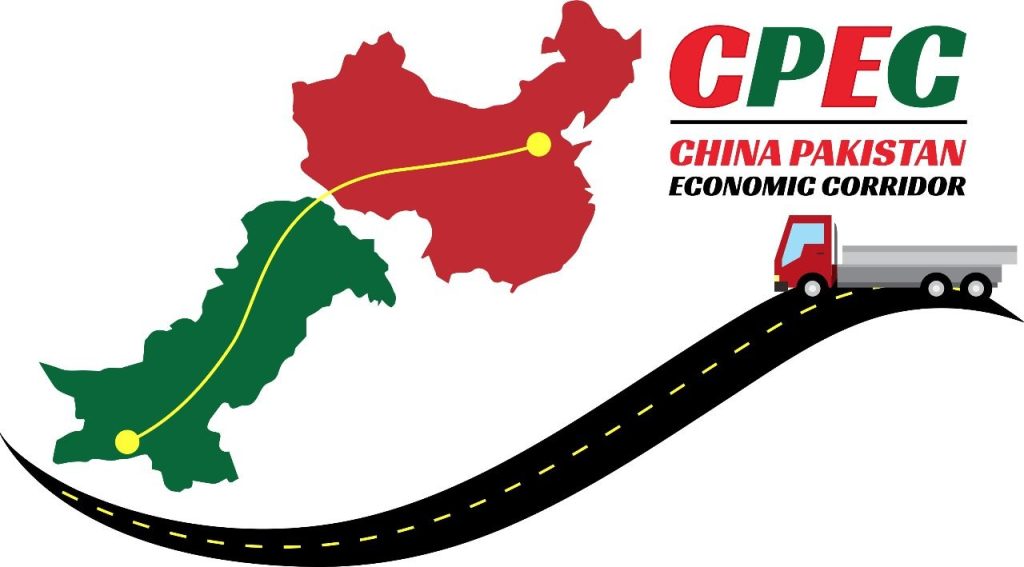

Since 2013, when China officially started the Belt and Road Initiative, the international importance of the countries included in the project has increased. The China-Pakistan Economic Corridor (CPEC), which is one of the main corridors of the initiative, is very important due to its route and the connection it will provide. In this respect, the project can be described as the “flagship” or “heart” of the Belt and Road Initiative.
The corridor aims to connect the northwestern region of China to the Arabian Sea through Pakistan’s Gwadar and Karachi Ports. This corridor is very important for the states of the region as well as for China and Pakistan. Moreover, CPEC has the capacity to have an impact on Iran, Afghanistan and Central Asian countries.
The value of CPEC, which is initially projected to be worth $46 billion; As of 2017, it is around 62 billion dollars. The emergence of the project was shaped by the memorandum of understanding for economic cooperation signed between Beijing and Islamabad in 2013. Developing ties between the two countries influenced the formation of CPEC and was affected by CPEC. As a matter of fact, China and Pakistan, which are getting closer and closer, signed 20 more cooperation agreements in 2015 to expand the scope of CPEC.
Within the scope of CPEC, projects are being developed in many areas such as energy, infrastructure, transportation, social and economic development, and cooperation in the field of industry. There are currently 14 energy projects completed. In addition, two projects are under construction and plans are being made for five projects.
However, CPEC also includes projects on special economic zones and ports and transport networks. Therefore, CPEC is an investment with the capacity to have serious effects on regional development with its sub-projects. In addition, CPEC projects are expected to develop economic and commercial relations between Asia, the Middle East and Europe.
CPEC has significantly increased Pakistani-China friendship. At the same time, the international value of certain regions in Pakistan has increased through investments and projects. Expanding Gwadar Port and increasing its capacity is also one of the initiatives within the scope of the project. Being close to many important ports increases the strategic importance of the port. The port was leased by a Chinese company for 40 years under CPEC. The project includes the initial expansion and upgrade of Gwadar Port to allow berthing of large vessels of up to 70,000 tons.
The port is located at the intersection of international shipping and oil trade routes. On the other hand, the increase in the global value of the region also contributes positively to the visibility of Pakistan. In addition, the expansion of the port and increasing its capacity provide gains for Pakistan in many ways. Factors such as the port becoming a potential transfer center, being a gateway to transit trade for Central Asia and Afghanistan, and tourism potential are just a few of them.
In terms of China, CPEC will make faster and easier transportation possible with its infrastructure projects. In addition, the economic access to oil and natural gas supply from the Gulf countries to China makes CPEC and the Gwadar Port work as a part of the project important because a cooperation ground based on a win-win logic will be created for all parties.
One of the sub-projects of the corridor is power plants. It is planned to build 19 power plants under CPEC. The most prominent among these is the Quaid-e-Azam Solar Energy Park. The 100 MW Solar Park in Bahawalpur is the largest solar generator in Pakistan. The Sahiwal Coal-Fired Power Plant, coordinated by the Pakistani Ministry of Water and Energy, is another important investment. Completed in 2017, the project has an energy supply capacity of 1.3 MW.
Projects aimed at improving Pakistan’s infrastructure also contain great opportunities for the country in the long run. Focusing on Pakistan’s infrastructure from north to south, CPEC aims to increase transportation and communication with its railway and road networks. This initiative has attracted approximately $25 billion in investments in Pakistan’s roads, ports, power plants and fiber optic cables.
It is expected that CPEC will open the door to various positive developments for the social life of Pakistan. For example, It is aimed to increase the socio-economic welfare of the people through the connection developed through transportation infrastructure such as Gilgit-Baltistan Highway, Havelian-Thakot Highway, Shonter-Astore Road, Gilgit-Shandore Road and Chitral-Chakdara Road.
Moreover, CPEC enhances China-Pakistan proximity and contributes to the harmony between the parties in acting together on regional issues. It is known that Beijing-Islamabad friendship has a rising profile in terms of acting jointly in the fight against terrorism in the context of regional policies or supporting each other in the difficulties encountered.
Thanks to CPEC, high-level visits between the parties have also become more frequent. In line with regional policies, Afghanistan is also considered to be included in the project. In addition, both sides favor the completion of CPEC as soon as possible. As a matter of fact, this intention is also reflected in the discourses of the parties.
As will be remembered, Pakistani Prime Minister Shahbaz Sharif, who went to China for a two-day official visit in November 2022, met with Chinese President Xi Jinping. Xi stated that he is ready to increase the level of multi-faceted strategic cooperation in the relations between the two countries and to give new impetus to the relations. He also stated that CPEC will accelerate it further through the CPEC Joint Cooperation Committee.
The latest development regarding the project is Sharif’s inauguration of a new Chinese-designed reactor at the Karachi Nuclear Power Plant in February 2023. Construction of the $2.7 billion unit was financed by China as part of a project to renovate the facility and strengthen Pakistan’s energy security.
It can be foreseen that the strategic partnership door opened with CPEC will provide long-term gains for both parties. Having a structure that brings many advantages and expands its development goals, CPEC is the heart of China-Pakistan friendship as well as the Belt and Road Initiative.