
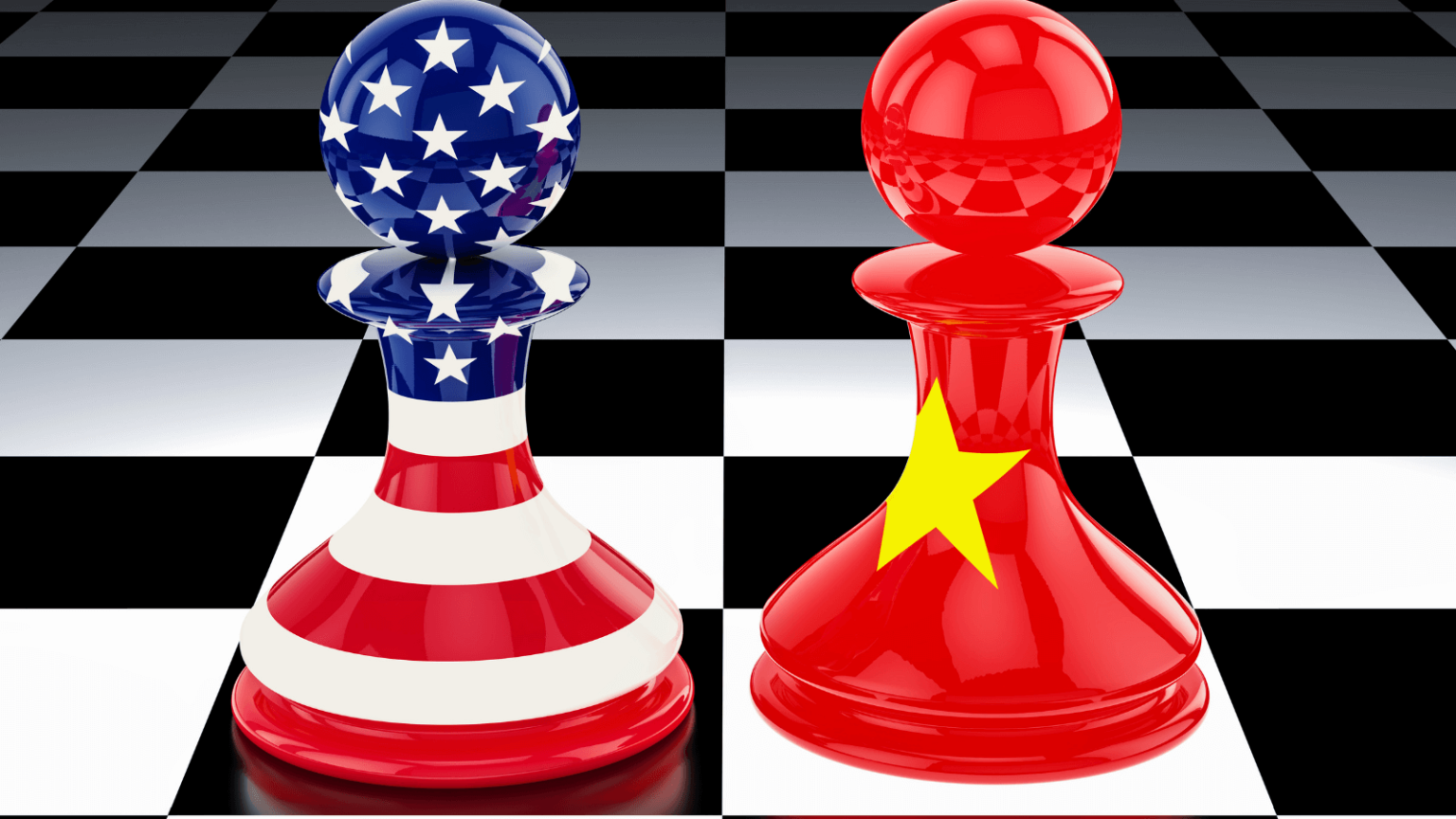

In international relations, the system’s order is not solely built upon institutions and military balances; the existing order is also reconstructed through meanings, values, and identities. The post-structuralist approach to international relations, particularly within the framework of David Campbell’s theory of identity in foreign policy (1992), has demonstrated that states discursively construct themselves against the “other actor.” This construct significantly impacts identity in domestic politics and its relationship with the world, not just foreign policy. At a time when identities are undergoing significant discursive transformations, approaching international relations solely within a realist framework offers a superficial analysis.
The United States of America’s (US) identity as the “leader of the liberal and free world” and the representative of universalism, transcending the American dream from the domestic socioeconomic imaginary to the international level, has been restored, particularly after the “Make America Great Again (MAGA 2.0)” vision[i]. In a world where the end of history is increasingly changing and shaping, MAGA 2.0 may at first seem like a promise of restoration, but in essence, it has created a new American nationalism centered on white identity, the Protestant ethic, and indigenous belonging. This discourse now codes immigrants as a threat and sees multiculturalism as a weakness. At the discursive level, the US has become a subject no longer striving to produce “universal values” but rather one striving to protect its own borders. As Campbell emphasizes, this is a projection that reflects its domestic identity crisis onto its foreign policy discourse.
Over the past two decades, the US’s stance toward China has been evolving from economic cooperation to outright hostility. While China appears to have assumed new leadership on a liberal level, China is adopting select elements of this order, transforming or directly challenging these values. China is committed to pursuing liberal economic principles such as free trade, infrastructure investment, and global economic connectivity, and is expanding these networks through mechanisms such as the Belt and Road Initiative (BRI), the Asian Infrastructure Investment Bank, and BRICS+.
While US media outlets and politicians consistently adopt an anti-China rhetoric, the US government imposes trade restrictions and sanctions on China. The US-China relationship must be understood within the context of the capitalist world system. Capital accumulation in core countries, also known as the “Global North,” relies on cheap labor and resources sourced from peripheral and semi-peripheral countries, also known as the “Global South”[ii]. This is critical for the high profits of multinational corporations that dominate global supply chains. The systematic price differential between the core and the periphery enables the transfer of large amounts of value from the periphery to the core through unequal exchange in international trade.
Since opening up to Western investment and trade in the 1980s, China has become a key component of this system. China has provided Western companies with a cheap yet highly skilled and productive workforce. For example, Apple’s production relies heavily on Chinese workers[iii]. Today, the capitalist class in core countries is seeking solutions to regain access to cheap labor and resources. One option, more frequently discussed in Western business media, is to relocate production to other parts of Asia, where wages are lower. However, this carries significant costs, including production losses, the need to find new personnel, and supply chain disruptions. The other option is to reduce wages in China again, and the US continues to pressure China on this issue.
The second factor fueling US hostility toward China is technology. Beijing has made extraordinary progress over the past decade in prioritizing technological development in strategic sectors in its industrial policies. Today, China boasts the world’s largest high-speed rail network, its own passenger aircraft, renewable energy sources, electric vehicles, medical technology, smartphones, microchip production, and artificial intelligence. These are achievements typically expected of high-income Western countries. Yet, China achieves this despite having a per capita income 80% below that of developed economies[iv].
China’s per capita military spending is below the global average. The US and its allies spend seven times more than China on military spending. Furthermore, the US possesses eight times more nuclear weapons than China[v]. In this regard, Campbell analyzes how security discourses construct identity, arguing that states frame the world as a combination of “order” and “chaos” to portray their own roles positively. China’s aestheticization of values such as the “right to development,” “dialogue among civilizations,” and “international equality” in its foreign policy documents demonstrates that it legitimizes its identity through soft power.In this context, China is not the leader of the liberal international order in the classical sense; rather, it is a power that has emerged from within this order and is shaping it in line with its own geopolitical interests. While the legitimacy of the US-led, established, and established international system is being undermined by the insular, anti-immigration, and nationalist rhetoric of its founders, China discursively legitimizes its vision of a “multipolar,” “non-Western,” and “inclusive” order with concepts like “Tianxia.” At this point, Ikenberry’s liberal institutionalist framework gains significance by emphasizing that China is a “beneficiary” of the existing order but does not share its normative foundations, while realist theorists point to China’s long-term intention to establish a new order that excludes Western-centric norms. Consequently, it would be more accurate to consider China not as the leader of a new liberal order, but rather as a founding actor of a post-liberal or alternative multipolar system.
[i] “What MAGA 2.0 Means for America”, Martens Centre for European Studies, https://www.martenscentre.eu/blog/what-maga-2-0-means-for-america/, (Date Accessed: 05.08.2025).
[ii] “The real reason the West is warmongering against China”, Aljazeera, https://www.aljazeera.com/opinions/2025/8/3/the-real-reason-the-west-is-warmongering-against-china, (Date Accessed: 05.08.2025).
[iii] Ibid.
[iv] Ibid.
[v] Ibid.