
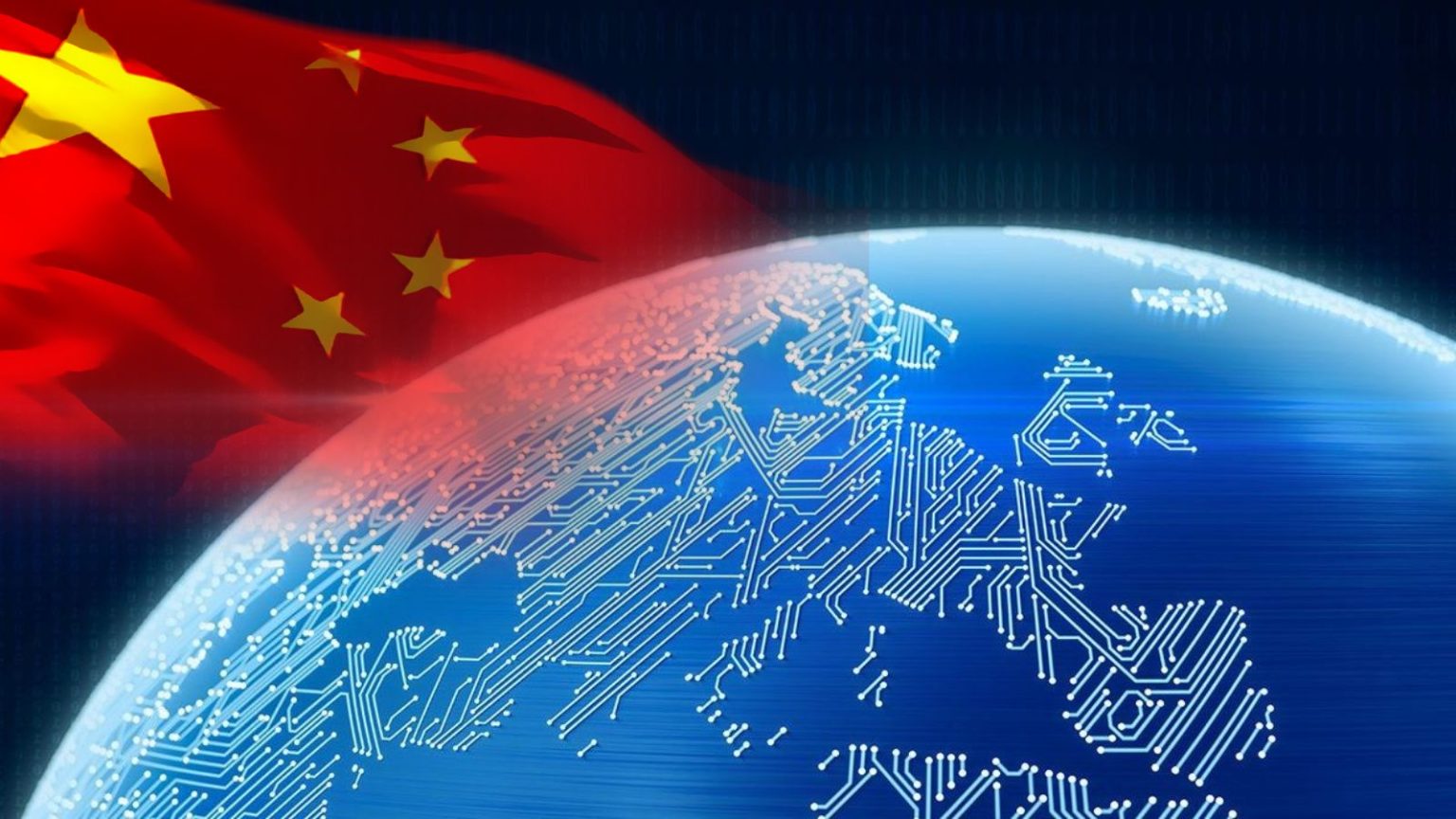

Artificial intelligence plays a strategic role in today’s international relations. The “AI Plus Manufacturing” action plan announced by the People’s Republic of China on January 8, 2026, aims to strengthen the country’s global leadership position by 2027 by establishing a secure and reliable supply chain in the field of AI. This plan, jointly prepared by eight ministries, emphasizes the integration of AI into the manufacturing sector, with a vision to developing new high-quality productive forces and strengthening industrialization. The objectives include implementing a large AI model, developing sector-specific models, creating 100 high-quality industrial data sets, and promoting 500 typical application scenarios. This development necessitates a reassessment of AI’s role in international relations, particularly in the context of US-China competition and global governance.[i]
China’s AI policies have undergone gradual development since the early 2000s and have been integrated into national development plans:
- Evolution can be divided into four main stages: the initial period (2006-2011), early development (2012-2014), macro planning (2015-2017), and the implementation period (2018-present). In 2006, intelligent computing was included for the first time in China’s National Medium- and Long-Term Technology Development Plan, making AI a national priority. This was a foundational step for AI and laid the groundwork for subsequent strategies.[ii]
- The “Internet Plus” strategy published by the State Council in 2015 defined AI as one of the strategic emerging industries and promoted the digital economy. This year has been recognized as the first year of “Internet Plus” in China, focusing on increasing connectivity and efficiency.[iii]
- In 2016, the 13th Five-Year Plan identified AI as a global leadership goal, focusing on industrial applications. The plan placed AI at the core of socio-economic development. In 2017, the State Council’s “New Generation Artificial Intelligence Development Plan” (AIDP) aimed to make China a world leader in AI by 2030, outlining a three-phase roadmap. It planned to reach a globally competitive level by 2020, make major breakthroughs by 2025, and achieve leadership by 2030. The plan emphasized the economic and military dimensions of AI.
- In 2021, the 14th Five-Year Plan made AI a strategic priority, aiming for the digital economy to account for 10% of GDP. That same year, the Ministry of Science and Technology published the “New Generation AI Code of Ethics,” focusing on human welfare, justice, and privacy protection.[iv]
- In 2022, the “Deep Synthesis Management Regulations” came into effect, regulating AI-generated synthetic media. In 2023, the “Provisional Regulation for Generative Artificial Intelligence Services” was published, defining the obligations of AI providers.[v]
- In 2025, the State Council’s “AI Plus Action Plan” made AI a national strategy, targeting 90% of smart terminals by 2027. It symbolized the transition from Internet Plus to AI Plus.[vi]
- The latest plan announced in 2026 emphasizes AI integration in manufacturing, aims to establish a global open-source ecosystem, and strengthen security governance. The timeline shows that China views AI as a tool for national security and economic development.[vii]
Details and Objectives of the New Action Plan
The 2026 action plan focuses on integrating AI into the manufacturing sector. This plan was prepared by eight departments (Ministry of Industry and Information Technology, Cyberspace Administration, etc.). The 2027 targets include hardware-software coordination of AI chips, model training innovations, and industrial data protection. The plan aims to cultivate two to three global ecosystem leader companies, identify 1,000 benchmark enterprises, and contribute Chinese solutions to global AI development. Reflecting China’s quest for autonomy in the AI supply chain, this plan is a response to US export controls.
Assessment of International Relations and Artificial Intelligence Developments
China’s AI strategy is profoundly affecting international relations; in particular, US-China competition is transforming global governance and geopolitical balances. The US-China AI competition is characterized as a technology war. The US has implemented advanced semiconductor export controls to slow China’s AI development. The controls, which began in 2018 during the Trump administration, have expanded under the Biden administration, restricting China’s access to GPUs. In response, China has taken countermeasures by leveraging its dominance in critical minerals (nickel, cobalt, etc.). Global competition is affecting global supply chains and increasing security risks through AI’s military applications (autonomous weapons, cyber warfare).
In the context of global AI governance, China launched the Global AI Governance Initiative (GAIGI) in 2023, proposing principles for safe AI. This aligns with China’s “community with a shared future” vision and enhances its soft power by offering AI solutions to Global South countries. However, China’s internal security wall is reflected in its AI models and influences global liberal norms. China’s AI investments in the Global South increase economic cooperation while also challenging US standards.
In conclusion, China’s 2027 AI plan is a continuation of its historical strategy and plays a transformative role in international relations. While US-China competition shapes global governance and geopolitical balances, the ethical and security dimensions of AI necessitate international cooperation. Developing multilateral frameworks for future AI governance could steer competition toward a constructive path. In this context, China’s contributions could be integrated into global discussions as “Chinese solutions.”
[i] “China aims for secure, reliable supply of AI core tech by 2027”, The State Council The People’s Republic of China, https://english.www.gov.cn/news/202601/08/content_WS695f1b55c6d00ca5f9a087b9.html, (Date Accessed: 08.01.2026).
[ii] “Global AI Governance Law and Policy: China”, IAPP, https://iapp.org/resources/article/global-ai-governance-china, (Date Accessed: 08.01.2026).
[iii] “CHINA AI STRATEGY: POLICY, REGULATION & GLOBAL IMPACT IN 2025-26”, Ashley Dudarenok, https://ashleydudarenok.com/china-ai-strategy/, (Date Accessed: 08.01.2026).
[iv] “Full Translation: China’s ‘New Generation Artificial Intelligence Development Plan’ (2017)”, Digichina, https://digichina.stanford.edu/work/full-translation-chinas-new-generation-artificial-intelligence-development-plan-2017/, (Date Accessed: 08.01.2026).
[v] “Tracing the Roots of China’s AI Regulations”, Carnegie, https://carnegieendowment.org/research/2024/02/tracing-the-roots-of-chinas-ai-regulations?lang=en, (Date Accessed: 08.01.2026).
[vi] Ibid.
[vii] “China Releases “AI Plus” Policy: A Brief Analysis”, Geopolitechs, https://www.geopolitechs.org/p/china-releases-ai-plus-policy-a-brief, (Date Accessed: 08.01.2026).