
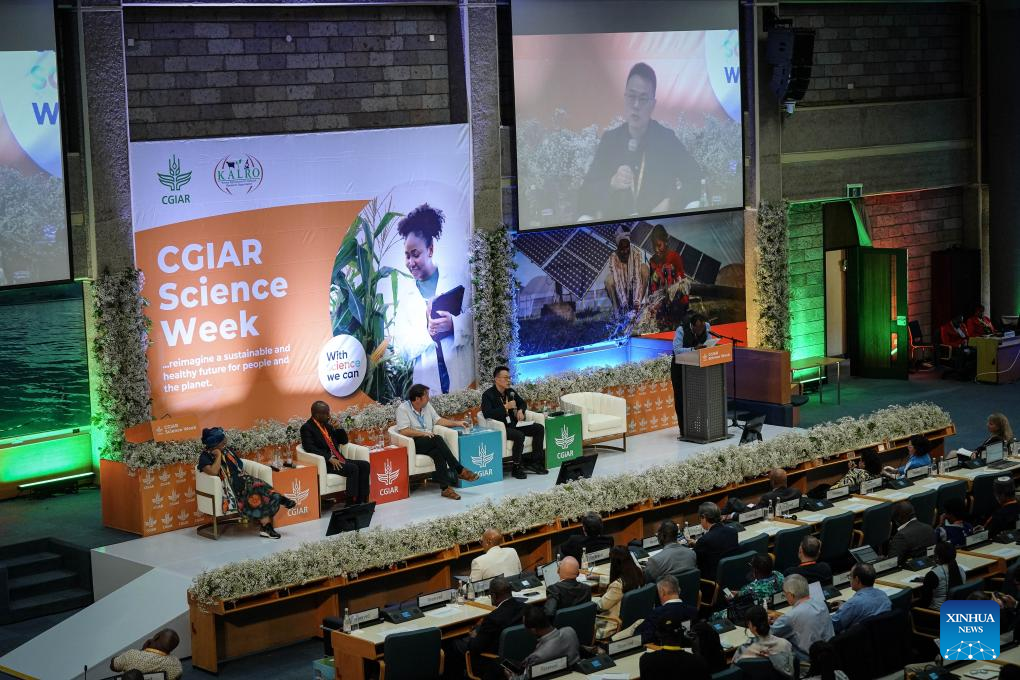

During the CGIAR Science Week held in Nairobi, Kenya, scientists and industry leaders emphasized that technology and innovation transfer through China-Africa cooperation plays a key role in improving Africa’s food systems. Participants highlighted that technologies such as plant breeding, irrigation, and pest control are crucial in tackling the continent’s challenges related to climate change, declining soil fertility, pests, and diseases.
Chinese genomics giant BGI Group also participated in the event. CGIAR Managing Director Ismahane Elouafi stated that innovative tools like artificial intelligence, genomics, and nanotechnology can boost crop and livestock productivity in Africa, helping to address hunger and malnutrition. She stressed that investments in soil health, water management, and the breeding of high-yielding crops are essential to reduce the continent’s annual food import bill, which currently stands at around 100 billion U.S. dollars.
Wang Jian, Chairman of BGI Group, and Xu Xun, Director of BGI-Research, noted that strengthened partnerships with CGIAR will accelerate seed system digitization, speed up crop breeding, and enhance climate resilience in food systems—especially across Africa. They emphasized that China’s advanced genomics technologies and AI models could significantly contribute to agricultural transformation under South-South cooperation.