
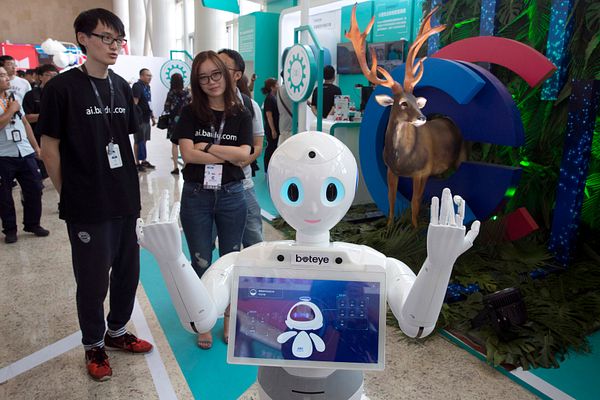

China is making significant strides in humanoid robot development, with advancements showcased at the 2025 Zhongguancun Forum in Beijing. One of the standout models, Kuavo, is a humanoid robot capable of performing a range of tasks, such as handling reception duties, responding to visitor inquiries, and guiding guests. This robot, developed by Shenzhen-based Leju Robotics, stands 1.7 meters tall and is already in use at universities, exhibition halls, and automotive plants, with future plans for domestic applications.
China’s growing leadership in robotics is evident from the country’s vast number of active robotics patents, making up two-thirds of the global total. The humanoid robot market is projected to reach 870 billion yuan (about 120 billion USD) by 2030. Notable robots, such as the Tiangong Ultra, capable of running and climbing steps, and the Walker S1, currently undergoing precision quality checks at Audi’s production facility, highlight the country’s focus on both industrial and household applications. With government-backed initiatives and funding, the development of humanoid robots in China continues to gain momentum.