
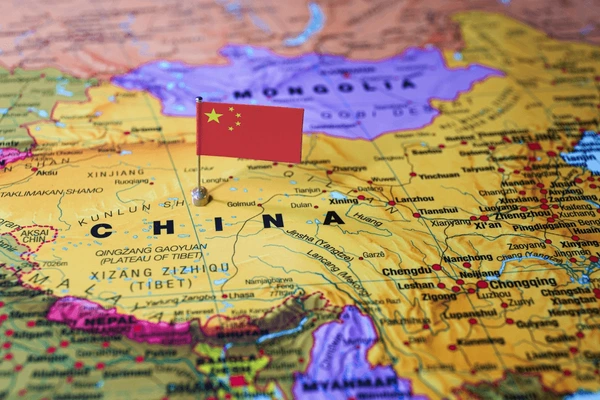

Panda diplomacy is a unique and effective soft power strategy used by China to enhance its international relations and project a positive image globally, with roots in ancient history. The giant panda, an iconic symbol of China, serves as a powerful diplomatic tool due to its universal appeal and rarity.
Through panda diplomacy, China has brought the traditional element of pandas into the international arena. This approach demonstrates that bilateral relationships are not only built through agreements and contracts but also through alternative means. Furthermore, this diplomacy shows how China blends the local and the universal. While the panda is an important local symbol for China, it is also a universally beloved animal.
The use of pandas as a diplomatic tool is rooted in their symbolism of peace, friendship, and goodwill, which makes them ideal ambassadors for China. Pandas housed in foreign zoos often attract significant public interest, generating tourism and cultural activities. This, in turn, strengthens China’s image abroad and enhances bilateral relations.
At this point, it can be observed that China assigns a diplomatic position to a living being that is not traditionally seen as a diplomatic instrument. The concepts symbolized by the panda can be interpreted as a strategic reflection of China’s goodwill when establishing bilateral relations. On the other hand, pandas can be seen not only as diplomatic symbols but also as representatives of Chinese culture in other countries. The intense interest in pandas in other nations can also be seen as increasing sympathy toward China.
Panda diplomacy also provides significant economic benefits to China. The rental fees for pandas can be quite high; countries pay around 1 million USD per year for the privilege of hosting a pair of pandas. These fees are used to cover the costs of panda conservation efforts in China, thereby supporting the country’s wildlife conservation initiatives.[i] In addition to their diplomatic and sociological impacts, the economic contributions of pandas to China cannot be overlooked. The fact that the fees generated through panda diplomacy are used for panda conservation efforts demonstrates China’s commitment to nature and its traditional elements. While China uses pandas for diplomatic purposes, it does not forget their intrinsic importance as a species.
“Panda diplomacy” has a long history dating back to the Tang Dynasty, which ruled from 618 to 907. Since its founding in 1949, the People’s Republic of China has used giant pandas as a gesture of goodwill towards both international allies and rival countries. Chinese Communist Party leader Mao Zedong gifted the first “panda ambassadors” to the Soviet Union in 1957. The pandas, named Ping Ping and Qi Qi, were sent to the Soviet Union to commemorate the 40th anniversary of the October Revolution. Mao also gifted pandas to other socialist allies, such as North Korea, in an effort to strengthen ties.
It can be seen that China’s diplomacy has deep historical roots, and the continuation of this practice to the present day demonstrates its success as a diplomatic strategy. It shows that China has long strived to establish good diplomatic relations and has sought alternative ways to achieve these relations. China’s gifting of pandas can be interpreted as a sign of trust in sharing a traditional symbol with that country. During the era of Mao Zedong, panda diplomacy expanded starting from socialist circles. From this perspective, it can be said that the official ideology of the state at that time influenced this diplomacy.
An important diplomatic turning point occurred shortly after U.S. President Richard Nixon’s historic visit to China in 1972, which ended more than twenty years of cold relations between the two countries. Just two months after this visit, an 18-month-old panda pair was sent to the United States as a gift.[ii] In this context, it can be seen that pandas were once again used as a diplomatic tool in China-U.S. relations. It contributed to the positive trajectory of the relationship between the two countries and demonstrated that panda diplomacy was once again an effective move.
By 1984, panda diplomacy underwent a transformation. Instead of being given as gifts, pandas began to be rented for a 10-year period, which could be extended. This change allowed China to continue promoting its image abroad while also building “guanxi,” a Mandarin term meaning trust and relationship. The rental of pandas was seen as a step that encouraged mutual partnerships between China and the countries receiving the pandas.[iii]
Despite the changes in panda diplomacy, it can be seen that China has maintained its goodwill. This change has, in a sense, made bilateral relations more active through the use of pandas. Furthermore, this shift reflects China’s desire to create a more long-term and sustainable impact in international relations. The rental method can be viewed as a step towards establishing more commercial relations and a strategy for mutual benefit.
During Xi Jinping’s presidency, panda diplomacy has been regularly used to symbolize China’s desire to strengthen bilateral relations with other countries. For example, in 2014, Malaysia received two pandas to celebrate the 40th anniversary of diplomatic relations with China. Similarly, in 2017, two pandas were sent to Indonesia to mark the 60th anniversary of relations between the two countries.[iv]
It can be seen that China continues to pursue its successful panda diplomacy with the same determination today. Not only neighboring countries, but also Western and many Asian countries have been offered this goodwill gesture. Panda diplomacy is not only used to establish good relations, but also to strengthen existing ones. As a result, it is evident that China has created a successful diplomatic strategy based on a universal value, which it has been using for a long time. It would not be wrong to say that China will continue to use this strategy effectively in the future.
Itır BOZDAĞ
[i] Kurbalija, J. (n.d.). Panda Diplomacy – Diplo”, Diplo, https://www.diplomacy.edu/topics/panda-diplomacy/, (Access Date: 27.12.2024).
[ii] Taylor, M. (2024, September 10). A brief history of “panda diplomacy” – with new additions to global zoos. https://www.bbc.com/future/article/20240226-a-brief-history-of-panda-diplomacy—with-new-additions-to-global-zoos, (Access Date: 27.12.2024).
[iii] Jazeera, A. (2023, October 3). “What is panda diplomacy, and why are the bears going back to China?”, Al Jazeera, https://www.aljazeera.com/news/2023/10/3/what-is-panda-diplomacy-and-why-are-the-bears-going-back-to, (Access Date: 27.12.2024).
[iv] “China’s long history of panda diplomacy”. (n.d.), UWA, https://www.uwa.edu.au/news/article/2024/june/chinas-long-history-of-panda-diplomacy, (Access Date: 27.12.2024).